
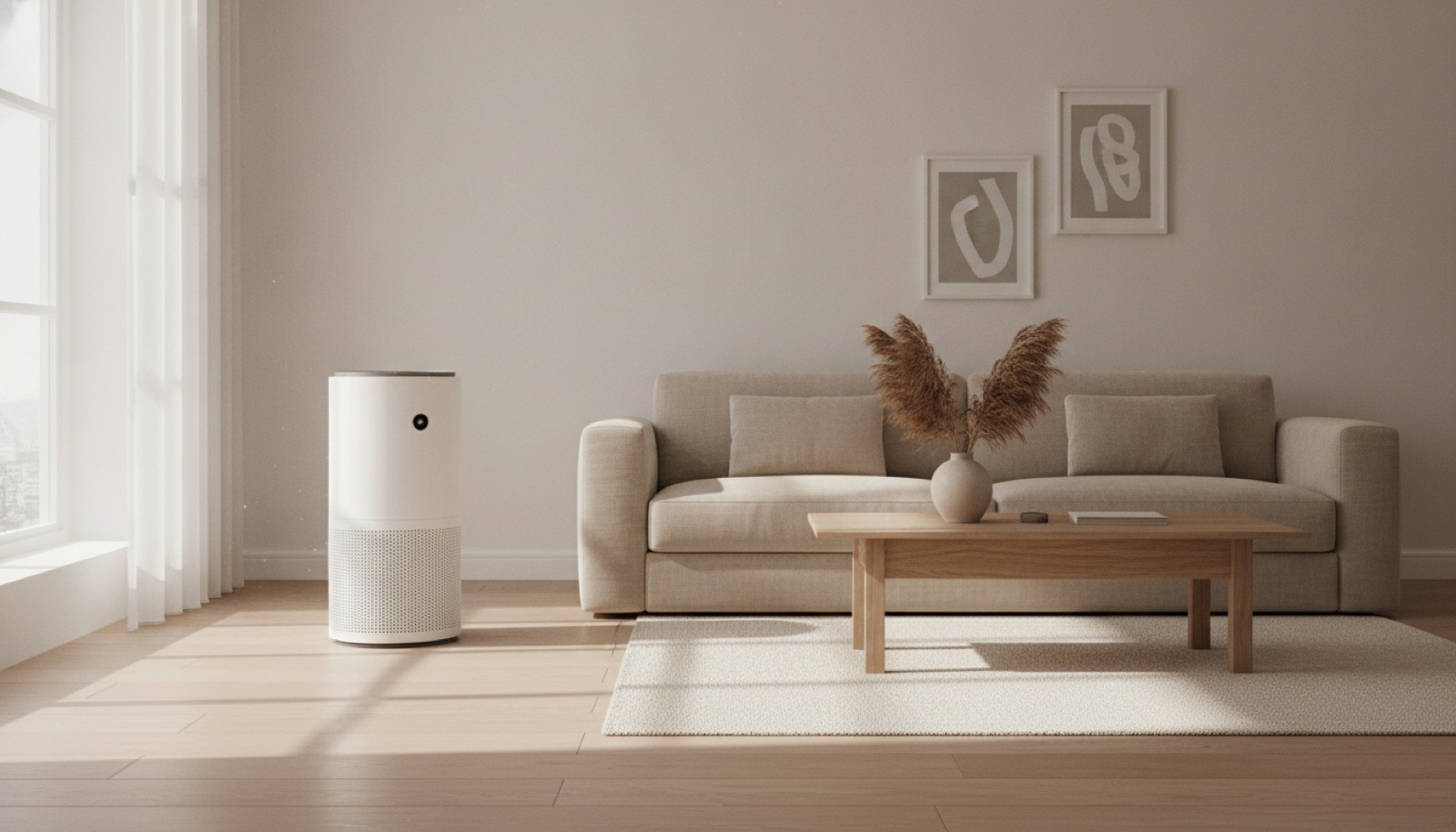
Best non-toxic air purifier: True HEPA and carbon, without the ozone
The best air purifiers use True HEPA plus activated carbon and never generate ozone. We ranked them on verified CADR, VOC capture, and long-run filter cost.
By The PlasticFreeLab TeamUpdated June 28, 202613 min read
Disclosure·PlasticFreeLab tests and recommends independently. We sometimes earn a commission when you buy through our links. It never affects our rankings.
How the 90/100 was earned.
Coway Airmega AP-1512HH
The Coway pairs a True HEPA filter with an activated-carbon stage, carries an AHAM-verified CADR so the cleaning claim is independently checked, runs quietly, and has the best long-run filter economics we found. Crucially it cleans air by filtration alone and generates no ozone, which rules out the ionizer-based units that can do more harm than good. For most rooms it is the sensible default: verified performance, low noise, and cheap to keep running.

Everything we'd buy, in order.
- 01Best overall90
Coway Airmega AP-1512HH
True HEPA plus an activated-carbon stage, with an AHAM-verified CADR so the cleaning rate is independently checked rather than claimed. It is quiet, sized well for bedrooms and living rooms up to around 360 square feet, and has the lowest long-run filter cost of the units we compared. It cleans by filtration only and produces no ozone. The default pick for most homes; nothing here is exotic, which is the point.
SponsoredCheck Amazon - 02Best for VOCs and off-gassing91
Austin Air HealthMate Classic
Medical-grade True HEPA paired with about 15 pounds of activated carbon and zeolite, which is far more sorbent media than a typical purifier carries, so it captures VOCs, formaldehyde, and off-gassing that thin carbon pads miss. Sealed steel housing, no plastic off-gassing of its own, and a five-year filter life. Heavy, plain-looking, and expensive up front, but the per-year cost is reasonable. The pick if your concern is chemicals and odors rather than just particles.
SponsoredCheck Amazon - 03Best value85
Levoit Core 600S
True HEPA plus a carbon layer at a noticeably lower price, sized for larger rooms, with app control and an air-quality sensor. The carbon stage is thinner than the Coway's and far thinner than the Austin's, so it handles particles well but VOCs only modestly. No ozone. A strong value pick for dust, pollen, and smoke in a big room; step up to the Austin if chemical capture is the priority.
SponsoredCheck Amazon - 04Best premium88
IQAir HealthPro Plus
A HyperHEPA filter rated to capture particles smaller than standard HEPA, plus a substantial gas-and-odor cartridge, with individually tested-and-certified performance on each unit. It is the highest-performing filter here and the most expensive by a wide margin, with pricey replacement cartridges. Worth it for sensitive individuals, allergy or asthma cases, or anyone who wants the documented ceiling. Overkill for a typical room.
SponsoredCheck Amazon
Named, not hinted at.
Ionizer / ozone-generating purifiers
Skip40Purifiers that clean by generating ions or ozone, rather than filtering, are the category to avoid. The California Air Resources Board and the US EPA both warn that ozone-generating air cleaners can produce ozone at levels that irritate the lungs and worsen asthma, and that they are not effective at cleaning air at safe ozone concentrations. If a unit advertises ozone, ionization, or active oxygen as the cleaning method, skip it. A True HEPA filter does the job without creating a new pollutant.
How this comparison was made
- What we picked for
- Disclosed materials, third-party certification, durability in real cooking, independent contamination testing where available.
- How we evaluated
- Manufacturer disclosures, regulatory filings, peer-reviewed papers, and hands-on wear-testing. We read the labels and the filings, not the press releases.
- Who disagrees with us
- We steel-man the opposing view in every comparison, and name the brand we almost picked and the reason we didn't.
- What would change our mind
- New independent lab testing, reformulation by a ranked brand, or a peer-reviewed finding that contradicts our current reasoning.
What people ask us most.
- What makes an air purifier non-toxic?
- Two things: how it cleans the air, and what it is made of. The cleaning method matters most. Filter-based purifiers using True HEPA and activated carbon physically trap particles and gases and add nothing to the air. Ionizing and ozone-generating units, by contrast, can produce ozone, which the EPA and California Air Resources Board warn is a lung irritant that worsens asthma. A non-toxic purifier cleans by filtration alone and generates no ozone. Secondarily, a sealed metal housing (like Austin Air's) avoids the faint plastic off-gassing some cheaper units have when new.
- What is True HEPA, and does the wording matter?
- It matters, because the marketing terms are not interchangeable. True HEPA (or just HEPA) means the filter captures at least 99.97 percent of particles at 0.3 microns, the standard regulatory definition. Terms like HEPA-type, HEPA-like, or 99 percent HEPA describe filters that do not meet that standard and capture noticeably less. Look for True HEPA or a stated 99.97 percent at 0.3 microns. For the cleaning rate itself, look for an AHAM-verified CADR, which is independently tested, rather than an unverified room-size claim.
- Do I need the activated-carbon stage, or is HEPA enough?
- It depends on what you are trying to remove. A True HEPA filter captures particles: dust, pollen, pet dander, smoke, and mold spores. It does not capture gases and odors. Activated carbon is the stage that adsorbs VOCs, cooking smells, smoke odor, and off-gassing from furniture or paint. If your concern is allergies or particle pollution, HEPA alone does most of the work. If it is chemical smells, new-furniture off-gassing, or VOCs, you want a substantial carbon stage, and thin carbon pads do little, so look at units like the Austin Air with pounds of carbon rather than a token layer.
- Are ozone-generating or ionizing purifiers safe?
- We do not recommend them, and this is one of the clearer positions in the category. The US EPA states that ozone generators sold as air cleaners are not safe or effective at concentrations that meet public-health standards, and the California Air Resources Board maintains a list of restricted ozone-generating devices. Ozone irritates the airways and can worsen asthma. Some ionizers also produce ozone as a byproduct. A True HEPA and carbon filter cleans the air at least as well without creating a secondary pollutant, so there is no reason to accept the risk.
- What size air purifier do I need, and what does it cost to run?
- Match the unit's verified CADR to your room, and budget for filters. As a rule, the CADR (in cubic feet per minute) should be at least two-thirds of your room's area in square feet for a few air changes per hour; bigger is better if you want quieter operation at lower fan speeds. The recurring cost is filters: True HEPA filters typically need replacing every 6 to 12 months, carbon stages vary, and Austin Air's run about five years. Total the annual filter cost before buying, because a cheap unit with expensive proprietary filters can cost more over time than a pricier one with affordable filters.
New independent lab testing that contradicts our current ranking. A reformulation by a top pick that quietly drops a disclosed certification. A peer-reviewed paper that changes the safety picture on one of the materials above. We'll update this page within a week and mark what changed.
Sources we cited on this page.
- 01US EPA, Ozone Generators that are Sold as Air Cleaners
- 02US EPA, Guide to Air Cleaners in the Home (HEPA and CADR)
- 03California Air Resources Board, Hazardous Ozone-Generating Air Purifiers
- 04AHAM, Clean Air Delivery Rate (CADR) verification program
- 05EPA, Volatile Organic Compounds' Impact on Indoor Air Quality
The PlasticFreeLab Team
A small group of researchers and writers cutting through the noise around non-toxic living. We read the studies, read the labels, test the products. We update our recommendations as the science evolves. We do not accept payment for product placement, we disclose every affiliate relationship, and we name the brands we reject.
Related in this hub.
- The Comparison13 min
Best Non-Toxic Candles of 2026, Tested and Ranked
Home · We tested eight cleaner-burning candle brands. The real factors are wax, wick, and fragrance, not the scare stories. Here's our ranking, with sources.
- The Comparison14 min
Best Non-Toxic Cleaning Products of 2026, Tested and Ranked
Home · We tested 8 non-toxic cleaning products for safety, performance, and honest labels, with EPA and EWG sources and one greenwashed pick we'd skip.
- The Guide11 min
Endocrine Disruptors (EDCs): What They Are, How to Limit
Microplastics · What endocrine disruptors are, the main classes like BPA and phthalates, how they affect hormones, who is most at risk, and how to lower exposure.
- The Comparison15 min
Best Non-Toxic & Organic Mattresses of 2026, Ranked
Home · We ranked 8 organic and non-toxic mattresses on certifications, flame-barrier method, and value, with one greenwashed pick we'd skip.
Get the Kitchen Swap Audit.
A printable checklist of 50+ kitchen items, each ranked swap now / swap eventually / don't bother. Free. Delivered instantly.
By subscribing, you agree to our Privacy Policy. One calm email a week. Unsubscribe anytime.
50+ items