
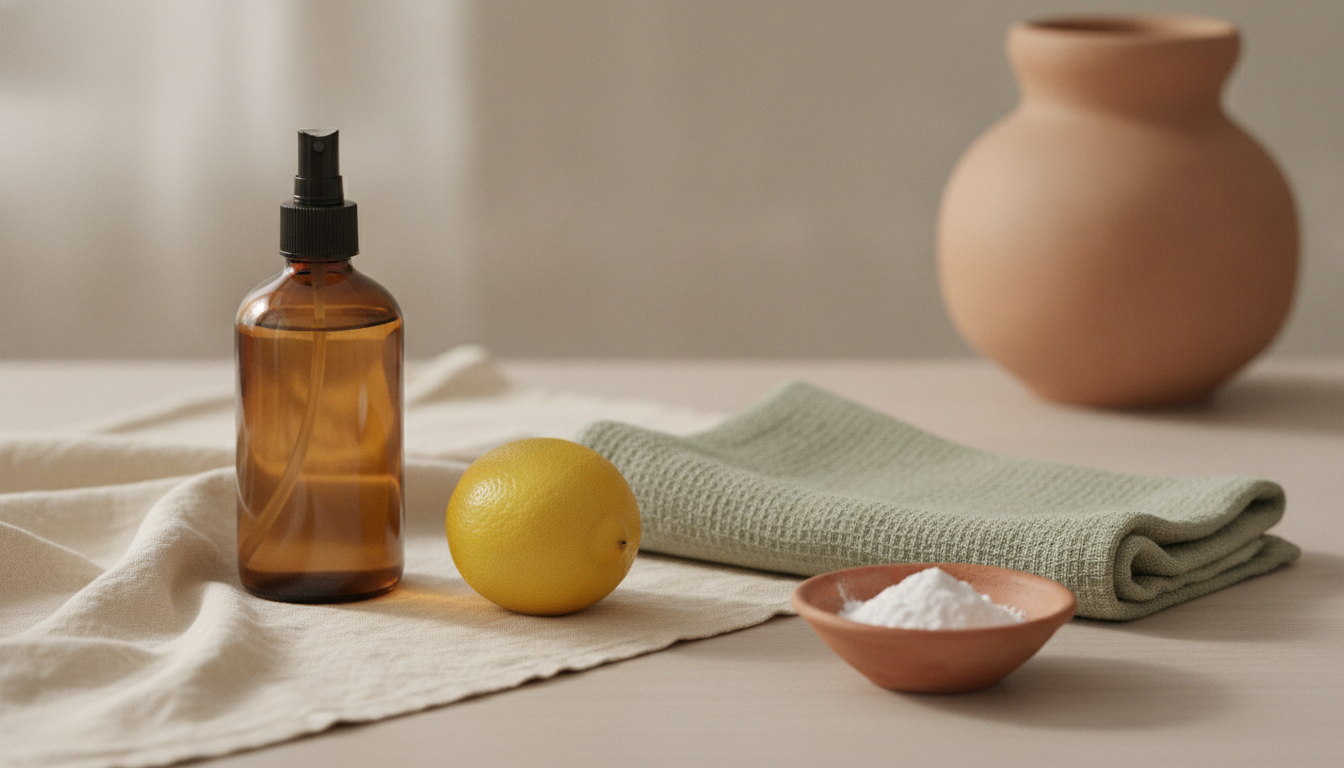
Best non-toxic cleaning products
We tested 8 non-toxic cleaning products for safety, performance, and honest labels, with EPA and EWG sources and one greenwashed pick we'd skip.
By The PlasticFreeLab TeamUpdated June 16, 202614 min read
Disclosure·PlasticFreeLab tests and recommends independently. We sometimes earn a commission when you buy through our links. It never affects our rankings.
How the 89/100 was earned.
Branch Basics Concentrate
Branch Basics gets the two things that matter most right at once: a fully disclosed, fragrance-free formula and genuinely useful cleaning across nearly every surface from one bottle. It is the system we reached for most, and the one we would hand to someone making their first switch without a long ingredient lecture.
Everything we'd buy, in order.
- 01Best overall90
Branch Basics Concentrate
One plant-and-mineral concentrate that you dilute into different bottles for all-purpose, bathroom, and streak-free glass cleaning, which cuts both cost and plastic. The full ingredient list is published, it is fragrance-free, and it carries no quaternary ammonium compounds (the 'quats' tied to respiratory irritation in some studies). In our wear tests it lifted kitchen grease and soap scum without the harsh smell or gloves most sprays seem to demand. The honest caveat: it is a cleaner, not a disinfectant, so it will not kill viruses on its own, and the starter kit is not cheap. For everyday non-toxic cleaning it was the most complete pick we tried.
SponsoredCheck Amazon - 02Best all-purpose88
Puracy Multi-Surface Cleaner
A ready-to-use spray that does the daily work honestly: plant-derived surfactants, a fully named ingredient list, and a light, optional scent rather than an undisclosed 'fragrance' blend hiding dozens of components. It wiped down counters, sealed stone, and glass without streaking or residue in our testing, and it is gentle enough to use without gloves. It is widely available and reasonably priced. Like every cleaner here it is not a disinfectant, so reach for something registered when you actually need to kill germs.
SponsoredCheck Amazon - 03Best refillable (low-plastic)87
Blueland Multi-Surface Tablets
The interesting format in this group: you keep one reusable bottle and drop in a dissolving tablet with tap water, so you stop shipping and discarding spray bottles full of water. The ingredients are disclosed, fragrance options are clearly labeled, and the cleaning is solid for everyday counters, glass, and light grease. It will not match a heavy degreaser on baked-on grime, and the tablets cost more per clean than bulk concentrate, but for cutting single-use plastic without guesswork it is the easiest swap we found.
SponsoredCheck Amazon - 04Best fragrance-free86
AspenClean Unscented All-Purpose
The pick for readers whose real concern is fragrance, which is the single most common contact allergen in the dermatology literature and a frequent respiratory trigger. AspenClean is EWG Verified and genuinely unscented rather than masked, with a short, fully named ingredient deck and no quats. It cleaned everyday messes reliably in our tests, though it asks for a little more elbow grease on dried grease than a stronger degreaser. A calm, transparent choice for sensitive households and anyone who simply dislikes scent.
SponsoredCheck Amazon - 05Best disinfectant85
Force of Nature Starter Kit
An unusual device that runs an electric current through water, salt, and vinegar to make hypochlorous acid and a small amount of sodium hydroxide, the same chemistry behind some hospital cleaners. It is an EPA-registered disinfectant proven against many bacteria and viruses, yet it has no added fragrance and makes no lingering residue, which is rare for a germ-killer. You have to mix a fresh batch and respect the contact time on the label. It does not degrease like a soap-based spray, so we treat it as the disinfecting partner to a good all-purpose cleaner rather than a do-everything bottle.
SponsoredCheck Amazon - 06Best budget84
ECOS All-Purpose Cleaner
The value case in this roundup. ECOS is EPA Safer Choice certified, plant-based, widely stocked, and inexpensive enough to use freely on floors, counters, and general grime. The ingredient list is disclosed and it skips quats and dyes. Performance is solid rather than exceptional, and the scented versions, while clearly labeled, are still better skipped if fragrance is your concern (choose the free-and-clear). For affordable, certified everyday cleaning it is hard to beat.
SponsoredCheck Amazon - 07Best multi-use base82
Dr. Bronner's Pure-Castile Soap
A century-old, fully disclosed castile soap you dilute heavily for floors, dishes, and surfaces, which makes it one of the most economical and low-plastic options anywhere. The labels are famously transparent and the formula is genuinely simple. Two honest cautions: it is concentrated, so over-dosing leaves a film, and you must never combine it with acidic cleaners like vinegar, which curdles the soap into a useless residue. It is a cleaner, not a disinfectant, and the scented versions use essential oils some sensitive skin reacts to. Used correctly it is a workhorse.
SponsoredCheck Amazon
Named, not hinted at.
Simple Green All-Purpose Cleaner
We'd skip62Simple Green is cheap, effective on grime, and wrapped in green branding that reads as non-toxic at a glance, which is exactly why we flag it. The original formula lists 'fragrance' as a single undisclosed word and has carried EWG hazard concerns over specific ingredients, and the name itself does the heavy lifting that the label does not. It is not dangerous to use with normal ventilation, and it cleans well, but for readers shopping the non-toxic angle specifically it is the kind of vague, greenwashed product a clearly labeled pick above replaces for similar money.
How this comparison was made
- What we picked for
- Disclosed materials, third-party certification, durability in real cooking, independent contamination testing where available.
- How we evaluated
- Manufacturer disclosures, regulatory filings, peer-reviewed papers, and hands-on wear-testing. We read the labels and the filings, not the press releases.
- Who disagrees with us
- We steel-man the opposing view in every comparison, and name the brand we almost picked and the reason we didn't.
- What would change our mind
- New independent lab testing, reformulation by a ranked brand, or a peer-reviewed finding that contradicts our current reasoning.
What people ask us most.
- Does 'non-toxic' or 'natural' on a cleaning label mean anything?
- On its own, not really. Terms like 'natural', 'green', 'eco', and 'non-toxic' are not regulated or defined for cleaning products, so a brand can use them freely as marketing. The signals that actually carry weight are third-party ones: EPA Safer Choice certification, a strong EWG rating, and full ingredient disclosure on the label. If a product avoids naming its ingredients, the friendly words on the front do not fill that gap.
- What does 'fragrance' on a cleaning label actually hide?
- A single word like 'fragrance' or 'parfum' can stand in for a blend of dozens of undisclosed components, protected as trade secret. That matters because fragrance is the leading contact allergen in the dermatology literature and a common respiratory irritant. It is not automatically harmful to everyone, but if you or anyone in your home is sensitive, choose a genuinely fragrance-free product or one that names its scent ingredients rather than trusting the catch-all term.
- Are quats (quaternary ammonium compounds) something to avoid?
- Quats are common disinfecting agents (look for names ending in 'ammonium chloride'). They work, but research has linked occupational and repeated exposure to asthma and respiratory irritation, and they are a recognized skin and airway sensitizer. You do not need them for everyday cleaning. When you genuinely need to disinfect, good ventilation and following the label contact time matter more than the marketing, and gentler EPA-registered options like hypochlorous acid exist.
- Do vinegar and baking soda actually clean, and can they disinfect?
- They clean many everyday messes well: vinegar cuts mineral and soap scum, baking soda lifts grease and deodorizes. But they are not disinfectants and should not be relied on to kill viruses or harmful bacteria, a point public-health guidance is clear about. Use them for routine cleaning, and use an EPA-registered disinfectant when killing germs is the actual goal, such as after illness or handling raw meat.
- Which cleaning products should never be mixed?
- Never combine bleach with ammonia, which produces toxic chloramine gas, and never combine bleach with vinegar or other acids, which releases chlorine gas. Both can happen by accident when layering products on the same surface. Use one product at a time, rinse between, and ventilate the room. Mixing 'helpful' cleaners is one of the most common causes of dangerous fumes at home.
New independent lab testing that contradicts our current ranking. A reformulation by a top pick that quietly drops a disclosed certification. A peer-reviewed paper that changes the safety picture on one of the materials above. We'll update this page within a week and mark what changed.
Sources we cited on this page.
The PlasticFreeLab Team
A small group of researchers and writers cutting through the noise around non-toxic living. We read the studies, read the labels, test the products. We update our recommendations as the science evolves. We do not accept payment for product placement, we disclose every affiliate relationship, and we name the brands we reject.
Related in this hub.
- The Guide11 min
Endocrine Disruptors (EDCs): What They Are, How to Limit
Microplastics · What endocrine disruptors are, the main classes like BPA and phthalates, how they affect hormones, who is most at risk, and how to lower exposure.
- The Guide10 min
What Are Phthalates? Where They Hide and How to Cut Exposure
Microplastics · A calm, cited guide to what phthalates are, where they hide in everyday products, why they matter, and simple ways to lower your exposure.
- The Comparison14 min
Best Non-Toxic Laundry Detergents of 2026, Tested and Ranked
Home · We ranked 8 non-toxic laundry detergents on ingredient transparency, fragrance, cleaning power, and value, with EPA, FDA, and EWG sources and one to skip.
- The Comparison12 min
Best Non-Toxic Diapers of 2026, Tested and Ranked
Home · We ranked disposable diapers on top-sheet materials, added fragrance and lotions, independent certification, and dryness, with a clear top pick and one mainstream diaper we would skip.
Get the Kitchen Swap Audit.
A printable checklist of 50+ kitchen items, each ranked swap now / swap eventually / don't bother. Free. Delivered instantly.
By subscribing, you agree to our Privacy Policy. One calm email a week. Unsubscribe anytime.
50+ items