
Best cast iron skillets
We ranked 8 cast iron skillets on surface smoothness, seasoning, weight, heat retention, and material safety, with FDA and CDC sources and one undisclosed-glaze enameled pan we'd skip.
By The PlasticFreeLab TeamUpdated July 13, 202613 min read
Disclosure·PlasticFreeLab tests and recommends independently. We sometimes earn a commission when you buy through our links. It never affects our rankings.
How the 88/100 was earned.
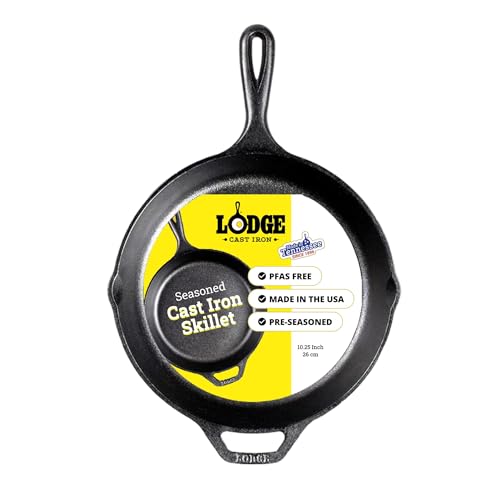
Lodge Cast Iron Skillet, 12-inch
Cast iron is one of the few genuinely non-toxic cooking surfaces you can buy without reading a materials disclosure, because a bare cast iron skillet is a single piece of iron with a baked-on oil seasoning and no synthetic coating, so there is no PTFE, no PFAS, and nothing to flake into food. The small amount of iron that leaches into cooking is dietary iron, which is beneficial for most people rather than a contaminant. The Lodge 12-inch is our overall value pick because it delivers all of that at a price nothing else on this list approaches, it comes pre-seasoned with vegetable oil, it is effectively indestructible, and it will outlast every coated pan in your kitchen combined. The honest trade-offs are that Lodge's surface is rougher than the machine-polished premium pans, so it takes longer to build a slick seasoning, and cast iron is heavy and reactive with very acidic foods. For the best combination of a truly non-toxic surface and a price anyone can justify, it is the default.
Everything we'd buy, in order.
- 01Best overall value85
Lodge Cast Iron Skillet, 12-inch
The Lodge 12-inch is the pan that made cast iron a default recommendation, and it earns the top value spot because it is a single piece of bare cast iron, pre-seasoned with vegetable oil and free of any synthetic coating, sold at a price that undercuts every other skillet here. That means the non-toxic question is answered by the material itself: there is no PTFE or PFAS to degrade, nothing to flake, and the only thing that migrates into food is dietary iron. It holds heat superbly for searing and moves from stovetop to oven without a thought, and it is genuinely a lifetime tool. The honest caveats are that Lodge's sand-cast surface is textured rather than polished, so it needs more cooking to build a slick nonstick seasoning than the premium pans, and like all bare cast iron it is heavy and best kept away from long-simmered acidic sauces. For non-toxic cooking on any budget, it is the sensible default.
SponsoredCheck Amazon - 02Best smooth surface89
Field Company No. 8 Cast Iron Skillet
The Field No. 8 is what a lot of people are chasing when they discover that vintage cast iron cooks better than modern Lodge: a lighter pan with a machine-polished, naturally smooth cooking surface that builds a slick, near-nonstick seasoning far faster than a rough sand-cast pan. It is bare cast iron with no coating, so it is as materially clean as any skillet here, and the smoothness plus the lower weight make it the most pleasant to actually cook and maneuver with. It earns its place for anyone whose hesitation about cast iron is the weight or the sticky early seasoning period. The honest trade-offs are the price, which is several times a Lodge, and the smaller capacity of the No. 8 compared with a 12-inch pan. For a bare, smooth, lighter cast iron that behaves like cherished vintage iron, it is the standout.
SponsoredCheck Amazon - 03Best enameled, no seasoning88
Le Creuset Signature Enameled Cast Iron Skillet
Le Creuset's enameled skillet is cast iron under a fired vitreous-enamel glaze, which changes the ownership experience entirely: it never needs seasoning, it will not rust, and it does not react with acidic foods, so you can simmer a tomato sauce in it without stripping anything. On materials, enamel is a glass glaze rather than a synthetic nonstick, so there is no PTFE or PFAS involved, and the one thing to vet is the glaze itself, which is why buying from a maker whose enamel meets food-contact limits for lead and cadmium matters, and Le Creuset's does. It gives you cast iron's heat retention with none of the maintenance. The honest points are the premium price, the weight, and the fact that enamel is not naturally nonstick, so you still cook with fat, and a sudden temperature change can chip the glaze. For low-maintenance, acid-safe cast iron, it is the top enameled pick.
SponsoredCheck Amazon - 04Best heirloom88
Smithey No. 12 Cast Iron Skillet
The Smithey No. 12 sits at the top of the bare-iron premium tier, a hand-finished pan with a mirror-polished cooking surface that is smoother than almost anything else new, so it seasons quickly and releases food cleanly once established. It is a single piece of cast iron with no coating, so it carries the same clean-material story as the Lodge with a far more refined surface and a build meant to be handed down. It earns its place for the cook who wants the best-cooking, best-looking bare cast iron and treats cookware as an heirloom purchase. The honest framing is that it is the most expensive skillet here and, being 12-inch cast iron, it is heavy, so the polish buys performance and beauty rather than convenience. For a lifetime bare-iron pan with a genuinely superior surface, it is the connoisseur's pick.
SponsoredCheck Amazon - 05Best modern design88
Stargazer 12-inch Cast Iron Skillet
The Stargazer is bare cast iron rethought for daily use: a US-made pan with a satin-smooth cooking surface, a longer, angled handle that stays cooler and gives better leverage, a generous helper handle, and lower, sloped walls that make tossing and cleaning easier than a traditional straight-walled skillet. On materials it is the same clean story as any bare cast iron, no coating and nothing to flake, and the smooth surface seasons well. It earns its spot for someone who wants premium bare iron but cares as much about ergonomics as about the cooking surface. The honest trade-offs are the price above a Lodge and, as with all 12-inch cast iron, real weight, though the handle design offsets some of the awkwardness. For the most thoughtfully designed bare cast iron pan to live with, it is the pick.
SponsoredCheck Amazon - 06Best lightweight86
Lodge Blacklock Triple-Seasoned Skillet
The Blacklock is Lodge's answer to the weight complaint, a thinner, lighter cast iron line that is triple-seasoned at the factory and noticeably smoother than the standard Lodge pans, at a price between basic Lodge and the boutique brands. It is bare cast iron with no synthetic coating, so it keeps the clean-material advantage while shaving off enough weight to matter for anyone who finds a classic skillet too heavy to handle one-handed. It earns its place as the bridge pick: better surface and lighter than a standard Lodge, cheaper than a Field or Smithey. The honest points are that it is still cast iron, so still heavier than steel or aluminum, and the thinner body holds slightly less heat than a thick classic pan on a hard sear. For lighter bare cast iron without a boutique price, it is the value standout.
SponsoredCheck Amazon - 07Best budget bare iron84
Victoria 12-inch Cast Iron Skillet
The Victoria skillet is the other honest budget answer alongside Lodge, a bare cast iron pan pre-seasoned with non-GMO flaxseed oil rather than the more common vegetable oil, with a long handle and pour spouts on both sides. On materials it is exactly as clean as any bare cast iron, a single piece of iron with a baked-oil seasoning and no coating, and the flaxseed seasoning gives a reasonably slick starting surface. It earns its place as a low-cost, widely available skillet that competes directly with Lodge on price. The honest trade-offs are that, like Lodge, the cast surface is textured rather than polished so it takes cooking to smooth out, and quality control across units is slightly less consistent than the premium brands. For a genuinely inexpensive, materially clean cast iron pan, it is a solid budget choice.
SponsoredCheck Amazon
Named, not hinted at.
Unbranded imported enameled cast iron with undisclosed glaze
We'd skip48This stands in for the cheap imported enameled cast iron sold in bright colors at a fraction of a Le Creuset, where the listing will not name the glaze chemistry or show any lead-and-cadmium testing. Bare cast iron does not have this problem, since there is no glaze to worry about, but enameled cast iron is only as safe as its glaze, and historically some imported and decorative enameled and ceramic cookware has failed lead and cadmium limits, which is the same concern we cover for glazed crocks and ceramicware. The tells are the ones we flag across the site: a fired glaze with no statement that it meets food-contact limits, no third-party heavy-metal testing, and a price that undercuts the transparent brands. We would skip any enameled pan that will not disclose its glaze, because the makers meeting the standard say so plainly, and bare cast iron sidesteps the question entirely.
How this comparison was made
- What we picked for
- Disclosed materials, third-party certification, durability in real cooking, independent contamination testing where available.
- How we evaluated
- Manufacturer disclosures, regulatory filings, peer-reviewed papers, and hands-on wear-testing. We read the labels and the filings, not the press releases.
- Who disagrees with us
- We steel-man the opposing view in every comparison, and name the brand we almost picked and the reason we didn't.
- What would change our mind
- New independent lab testing, reformulation by a ranked brand, or a peer-reviewed finding that contradicts our current reasoning.
What people ask us most.
- Is cast iron actually non-toxic to cook in?
- Bare cast iron is one of the cleanest cooking surfaces you can buy, and that is the main reason it belongs on a non-toxic kitchen list. A bare cast iron skillet is a single piece of iron with a polymerized-oil seasoning baked onto it, and there is no PTFE, no PFAS, and no synthetic nonstick coating anywhere, so there is nothing to break down at high heat or flake into food, which is precisely the concern that surrounds worn nonstick pans. The one thing that does migrate is iron itself, and small amounts of dietary iron leaching into food, especially acidic food, is beneficial for most people rather than harmful, though anyone on an iron-restricted diet or with a condition like hemochromatosis should be aware of it. Enameled cast iron is a slightly different case: the iron is sealed under a glass glaze, so the question shifts to whether that glaze meets food-contact limits for lead and cadmium, which reputable brands ensure and disclose.
- Why does a Lodge feel rougher than an expensive skillet?
- It comes down to how the surface is finished, and it is the single biggest difference between budget and premium bare cast iron. Modern mass-market pans like Lodge are sand-cast and left with the slightly pebbled texture that process produces, then pre-seasoned over it, which works perfectly well but means the cooking surface starts rough and needs more use to build up a slick, filled-in seasoning. Premium brands like Field, Smithey, and Stargazer machine-polish or hand-finish the cooking surface to a smooth or mirror finish before seasoning, which is why they release food more easily out of the box and season faster, and it is also why they cost several times more. Neither is more or less non-toxic, since both are bare iron with no coating; the smoothness is a performance and convenience feature, not a safety one. A rough Lodge will eventually develop a smooth seasoning with regular cooking, it just takes longer.
- How do I season and care for a cast iron skillet?
- The routine is simpler than its reputation suggests and it is what keeps a bare pan naturally nonstick and rust-free. To season, coat the pan with a very thin layer of a neutral high-smoke-point oil, wipe it back so it looks almost dry, and bake it upside down in a hot oven for about an hour, then let it cool; repeating this a few times builds the hard, slick surface. Day to day, cook with a little fat, and clean with hot water and a brush or a chainmail scrubber, avoiding long soaks and the dishwasher, which strip seasoning and cause rust. Dry the pan promptly, ideally on a warm burner, and wipe on a whisper of oil before storing. Contrary to old advice, a little soap is fine on a well-seasoned pan. The two mistakes to avoid are leaving it wet, which rusts it, and simmering acidic tomato or wine sauces in it for a long time, which can strip seasoning and lend a metallic taste; for those dishes, reach for enameled cast iron or stainless.
- Bare or enameled cast iron, which should I choose?
- They solve different problems, so the right answer depends on what you cook and how much maintenance you want. Bare cast iron, like the Lodge, Field, and Smithey pans, gives you a naturally nonstick seasoned surface, the best high-heat searing, and the lowest price, but it demands seasoning and drying care and does not love long-simmered acidic dishes. Enameled cast iron, like the Le Creuset, gives you the same excellent heat retention with none of the maintenance: no seasoning, no rust, and full compatibility with acidic sauces, braises, and tomato-based dishes, at the cost of a higher price, a surface that is not naturally nonstick, and a glaze that can chip. On materials, bare iron sidesteps any coating question entirely, while enameled iron is safe as long as its glaze meets food-contact limits, which is why brand transparency matters there. Many kitchens keep both: a bare skillet for searing and a small enameled pan or Dutch oven for anything acidic or long-braised.
- Does cast iron leach too much iron into food?
- For most people the amount is small and beneficial rather than a concern, but it is worth understanding because it is the one thing that genuinely migrates from a bare pan. Cooking in bare cast iron does add measurable iron to food, and the effect is largest with acidic foods like tomato sauce, longer cooking times, and a newer, less-seasoned pan, while a well-seasoned pan transfers less. For the general population, and especially for people prone to low iron, this is a modest dietary bonus, not a toxicity problem, and it is a different category entirely from a synthetic coating shedding into food. The people who should pay attention are those advised to limit iron intake, such as anyone with hemochromatosis or another iron-overload condition, who may prefer enameled cast iron or stainless so the sealed or inert surface does not add iron. As the seasoning matures the amount also drops, so a long-owned pan contributes less than a brand-new one.
New independent lab testing that contradicts our current ranking. A reformulation by a top pick that quietly drops a disclosed certification. A peer-reviewed paper that changes the safety picture on one of the materials above. We'll update this page within a week and mark what changed.
Sources we cited on this page.
The PlasticFreeLab Team
A small group of researchers and writers cutting through the noise around non-toxic living. We read the studies, read the labels, test the products. We update our recommendations as the science evolves. We do not accept payment for product placement, we disclose every affiliate relationship, and we name the brands we reject.
Related in this hub.
- The Explainer8 min
Do Plastic Cutting Boards Shed Microplastics? The Study Explained
Kitchen · A 2024 study found that chopping on plastic boards can release microplastics into food. Here are the numbers, their limits, and the simple, sensible takeaway.
- The Explainer7 min
Is Caraway Cookware Non-Toxic? An Honest Verdict
Kitchen · Caraway uses a ceramic non-stick coating free of PFAS, PFOA, lead, and cadmium. Here is what that means, where the limits are, and who it is worth it for.
- The Explainer7 min
Is Our Place Cookware Non-Toxic? An Honest Verdict
Kitchen · The Our Place Always Pan uses a ceramic non-stick coating free of PFAS, PFOA, lead, and cadmium. Here is what that means and where the limits are.
- The Comparison13 min
Best Non-Toxic Rice Cookers of 2026, Tested and Ranked
Kitchen · We ranked 7 rice cookers on the one thing that decides non-toxic, the inner pot, favoring bare 18/8 stainless steel and unglazed clay over PTFE nonstick, with FDA, EPA, and NSF sources and one coated cooker we'd skip.
Get the Kitchen Swap Audit.
A printable checklist of 50+ kitchen items, each ranked swap now / swap eventually / don't bother. Free. Delivered instantly.
By subscribing, you agree to our Privacy Policy. One calm email a week. Unsubscribe anytime.
50+ items