
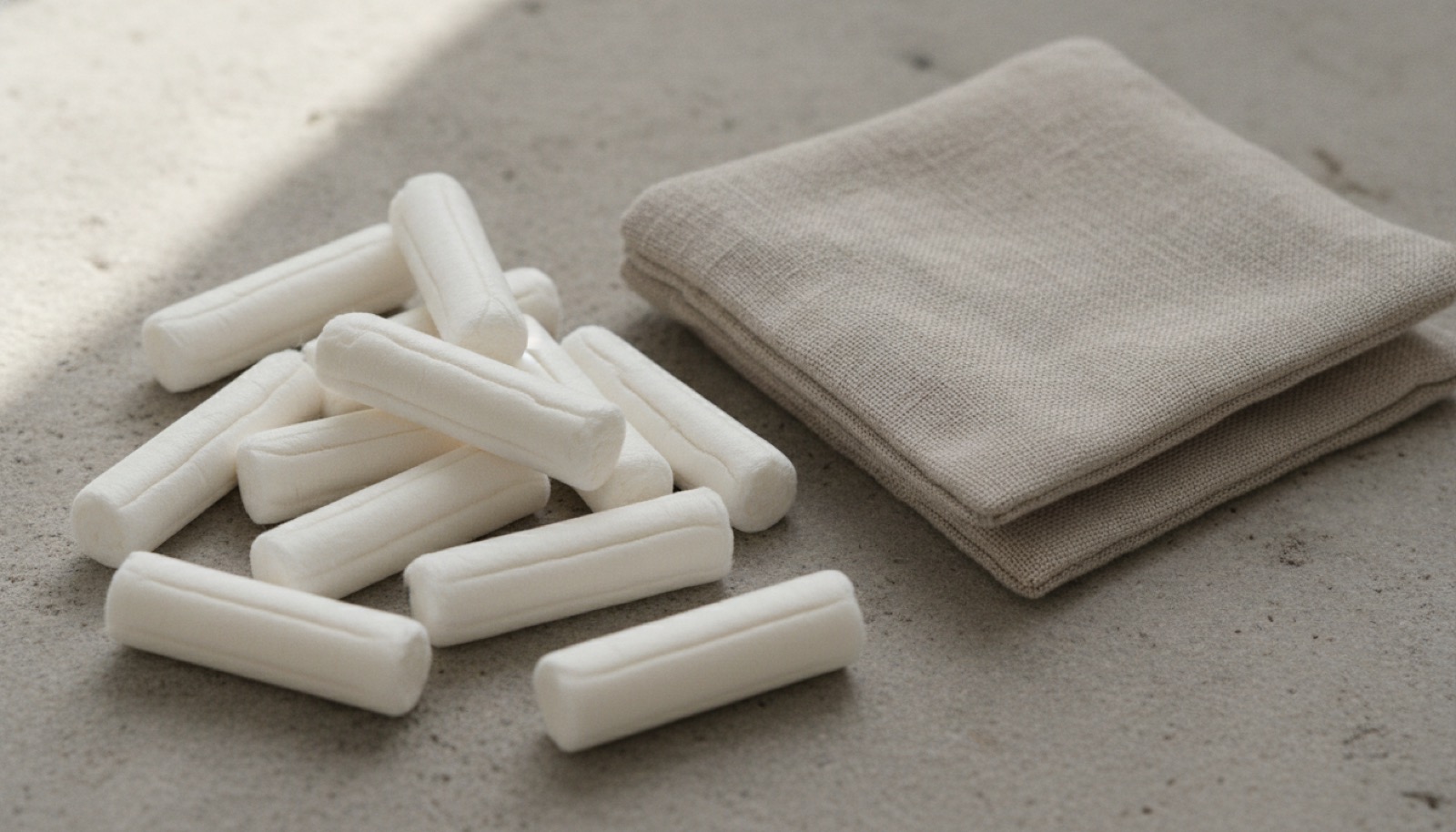
Best organic and non-toxic tampons
We ranked organic cotton tampons on fiber certification, fragrance, applicator material, and absorbency, with FDA and peer-reviewed sources and one to skip.
By The PlasticFreeLab TeamUpdated June 29, 202612 min read
Disclosure·PlasticFreeLab tests and recommends independently. We sometimes earn a commission when you buy through our links. It never affects our rankings.
How the 89/100 was earned.
Rael Organic Cotton Tampons
Rael uses 100 percent GOTS-certified organic cotton with no fragrance, no chlorine bleaching, and no rayon, and pairs it with a BPA-free plant-based applicator that actually works smoothly. It is widely stocked, comes in a full absorbency range, and the company publishes its materials clearly. For most people shopping the organic angle, it is the easiest, most verifiable pick.
Everything we'd buy, in order.
- 01Best overall90
Rael Organic Cotton Tampons
100 percent GOTS-certified organic cotton, no synthetic fragrance, no rayon, and no chlorine bleaching, with a smooth BPA-free plant-based applicator. The absorbency range is complete from light to super-plus, the strings are securely sewn, and the cotton expands evenly rather than bunching. Widely available and clearly labeled about what is and is not in it. The straightforward recommendation for anyone moving off conventional tampons.
SponsoredCheck Amazon - 02Best applicator88
Cora Organic Cotton Tampons
GOTS-certified organic cotton core with a comfortable bamboo-based or BPA-free plant applicator depending on the line, no fragrance, dyes, or chlorine bleaching. The applicator is the standout: it is one of the smoothest non-plastic-virgin applicators we used, which matters more than people expect for comfort. Absorbency is reliable across the range. Slightly pricier than Rael per box, but the application experience is a genuine reason to pick it.
SponsoredCheck Amazon - 03Best subscription86
LOLA Organic Cotton Tampons
100 percent organic cotton, fragrance-free, with a compact BPA-free applicator and a flexible subscription that lets you mix absorbencies per cycle. The cotton is certified and the ingredient transparency is good. Cleaning up the experience rather than reinventing it, LOLA is the easy pick if you want organic tampons to simply arrive on schedule. Performance is solid; the draw here is the convenience and the customizable box.
SponsoredCheck Amazon - 04Best plastic-free87
Natracare Organic Tampons (non-applicator)
The lowest-waste option here: 100 percent organic cotton, no applicator at all, certified to the GOTS standard and the only brand in this group that is also widely available unbleached and free of plastic packaging. Natracare has the longest track record in the category. The trade-off is the non-applicator format, which has a learning curve and is not for everyone. If your priority is minimal plastic and a long-trusted brand, this is the pick.
SponsoredCheck Amazon - 05Best for easy availability84
The Honest Company Organic Tampons
Organic cotton, fragrance-free, with a BPA-free applicator and the advantage of being stocked in mainstream stores rather than only online. The certification and ingredient story are sound. It ranks below the leaders mainly on a slightly narrower absorbency range and a higher per-box cost, but if you would rather buy organic tampons on a normal grocery run than wait for a delivery, this is the convenient mainstream option.
SponsoredCheck Amazon
Named, not hinted at.
Conventional scented tampons
We'd skip52This stands in for the scented, conventional-cotton-and-rayon tampons that still fill most shelves. The two avoidable issues are the added fragrance, which can irritate sensitive vaginal tissue and serves no functional purpose, and the rayon-cotton blend bleached by older methods. Modern FDA monitoring puts dioxin levels very low, so this is not a poison, but there is no upside to fragrance against mucosal tissue and an easy unscented organic alternative exists. We would skip anything labeled 'fresh scent' for period use.
How this comparison was made
- What we picked for
- Disclosed materials, third-party certification, durability in real cooking, independent contamination testing where available.
- How we evaluated
- Manufacturer disclosures, regulatory filings, peer-reviewed papers, and hands-on wear-testing. We read the labels and the filings, not the press releases.
- Who disagrees with us
- We steel-man the opposing view in every comparison, and name the brand we almost picked and the reason we didn't.
- What would change our mind
- New independent lab testing, reformulation by a ranked brand, or a peer-reviewed finding that contradicts our current reasoning.
What people ask us most.
- Are conventional tampons actually unsafe?
- Not in the dramatic sense the headlines imply, but there are narrow, avoidable concerns. The FDA monitors tampons as medical devices and reports that dioxin levels from modern chlorine-free or elemental-chlorine-free bleaching are at or below trace amounts, well under levels of concern. The real, defensible reasons to switch are added fragrance, which can irritate sensitive vaginal and vulvar tissue and serves no function, and a preference to avoid rayon and conventional-cotton pesticide residues against absorptive mucosal tissue. It is a sensible swap on exposure-reduction grounds, not an emergency.
- What makes a tampon 'organic' or 'non-toxic'?
- The meaningful marker is 100 percent certified organic cotton, ideally GOTS-certified, with no rayon, no synthetic fragrance, and no chlorine gas bleaching. 'Organic' on the box should mean the cotton was grown without synthetic pesticides and processed to an organic standard. 'Non-toxic' on its own is an unregulated marketing word, so look past it to the fiber content and the certification. A genuinely better tampon names its cotton certification, states it is fragrance-free, and uses a BPA-free applicator if it has one.
- Do organic tampons reduce toxic shock syndrome risk?
- There is no good evidence that organic cotton tampons lower TSS risk compared with conventional ones, and we will not claim otherwise. Toxic shock syndrome is rare and linked primarily to leaving a high-absorbency tampon in too long, which lets certain bacteria proliferate, rather than to the fiber being organic or not. The protective behaviors are the same regardless of brand: use the lowest absorbency that works for your flow, change it every four to eight hours, and do not sleep in a super-absorbency tampon. Organic versus conventional is about fragrance and fiber, not TSS.
- Is the applicator material worth caring about?
- It is a minor but real consideration. Most conventional applicators are virgin plastic, and a few older designs used materials that could contain BPA. The cleaner options use BPA-free plastic, plant-based bioplastic, or cardboard, or skip the applicator entirely. The exposure from an applicator is brief, so this matters less than the fragrance and fiber questions, but since BPA-free and plant-based applicators are now common and work well, there is little reason not to choose one. Cardboard and non-applicator formats also cut plastic waste meaningfully.
- Should I consider a menstrual cup or period underwear instead?
- They are worth considering, and for many people they are the lowest-exposure and lowest-waste options of all. A medical-grade silicone cup contacts the body but adds no fibers or fragrance and is reusable for years, and certified period underwear avoids insertion entirely. The trade-offs are a learning curve for the cup and, historically, PFAS concerns in some period underwear, so choose a brand that publishes PFAS-free testing. If tampons are your preference, organic cotton is the better tampon; if you are open to alternatives, these are reasonable next steps.
New independent lab testing that contradicts our current ranking. A reformulation by a top pick that quietly drops a disclosed certification. A peer-reviewed paper that changes the safety picture on one of the materials above. We'll update this page within a week and mark what changed.
Sources we cited on this page.
The PlasticFreeLab Team
A small group of researchers and writers cutting through the noise around non-toxic living. We read the studies, read the labels, test the products. We update our recommendations as the science evolves. We do not accept payment for product placement, we disclose every affiliate relationship, and we name the brands we reject.
Related in this hub.
- The Guide18 min
Non-Toxic Personal Care: The Calm, Evidence-Led Guide
Personal Care · Which ingredients in your shampoo, deodorant, sunscreen, and period products are worth avoiding, what the science actually says, and the order to make the swaps. No panic, just the evidence.
- The Comparison14 min
Best Mineral Sunscreens of 2026, Tested and Ranked
Personal Care · We tested mineral (zinc oxide and titanium dioxide) sunscreens for protection, feel, and white cast. Here are 8 we trust, plus one to skip.
- The Guide11 min
Endocrine Disruptors (EDCs): What They Are, How to Limit
Microplastics · What endocrine disruptors are, the main classes like BPA and phthalates, how they affect hormones, who is most at risk, and how to lower exposure.
- The Comparison13 min
Best Organic Cotton Underwear of 2026, Tested and Ranked
Clothing · GOTS-certified organic cotton underwear you can actually verify: tested picks, the elastane trade-off, microplastic-free materials, and the period brands worth trusting after Thinx.
Get the Kitchen Swap Audit.
A printable checklist of 50+ kitchen items, each ranked swap now / swap eventually / don't bother. Free. Delivered instantly.
By subscribing, you agree to our Privacy Policy. One calm email a week. Unsubscribe anytime.
50+ items